
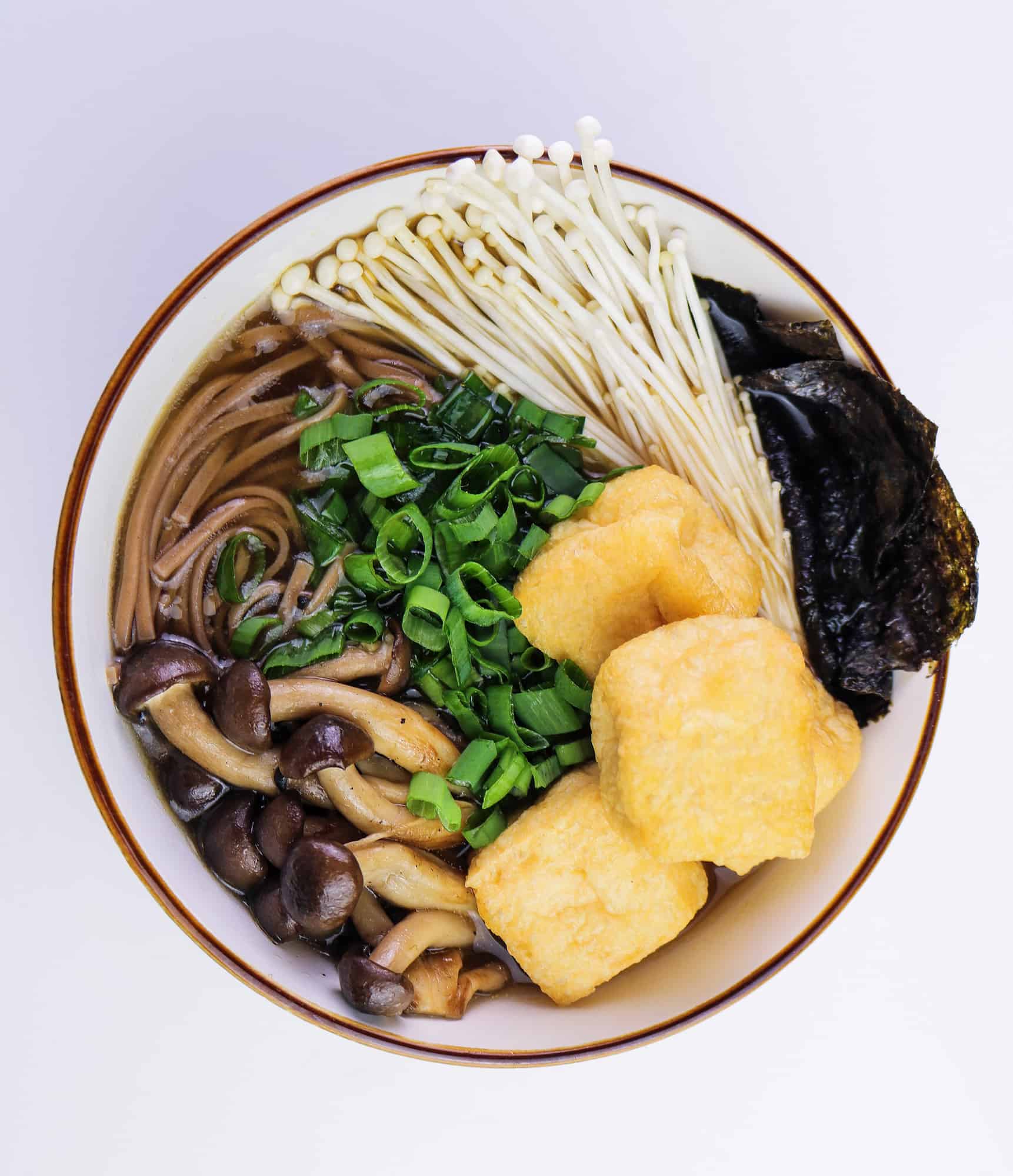
This vegan mushroom soba ramen noodle bowl is the best comfort food to enjoy in cold days or whenever we fancy a flavourful and cosy meal.

This Vegan Mushroom Soba Ramen is a beautiful example of how simple ingredients can deliver complex, rich flavour. It’s deeply comforting, completely plant-based, and endlessly customisable—ideal for ramen nights at home.
Looking for more vegan Japanese recipes? Explore the archive for vegan miso soup, gyoza, katsu tofu and more!
Jump to:
Why You’ll Love This Vegan Ramen
- 100% plant-based and dairy-free
- Packed with umami flavour thanks to kombu, shiitake and tamari
- Comforting and warming—perfect for chilly days
- Easy to customise with your favourite toppings
- Light yet satisfying with soba noodles and tofu puffs
Vegan Ramen - The Secret for Success
It's that time of the year where cosy, warm and soupy foods are our best alleys.
To me what ticks all of the above boxes is indeed ramen.
This Japanese delicacy is indeed highly comforting, warming and so darn delicious. The secret of the perfect flavourful ramen lies behind the broth.
Do not be intimidated by this statement though. Making a good ramen broth from scratch is actually pretty easy and straightforward. Nevertheless it will make you save money too, as the it's really cheap compared to those store bought, not to mention that you will know exactly what to put in it.
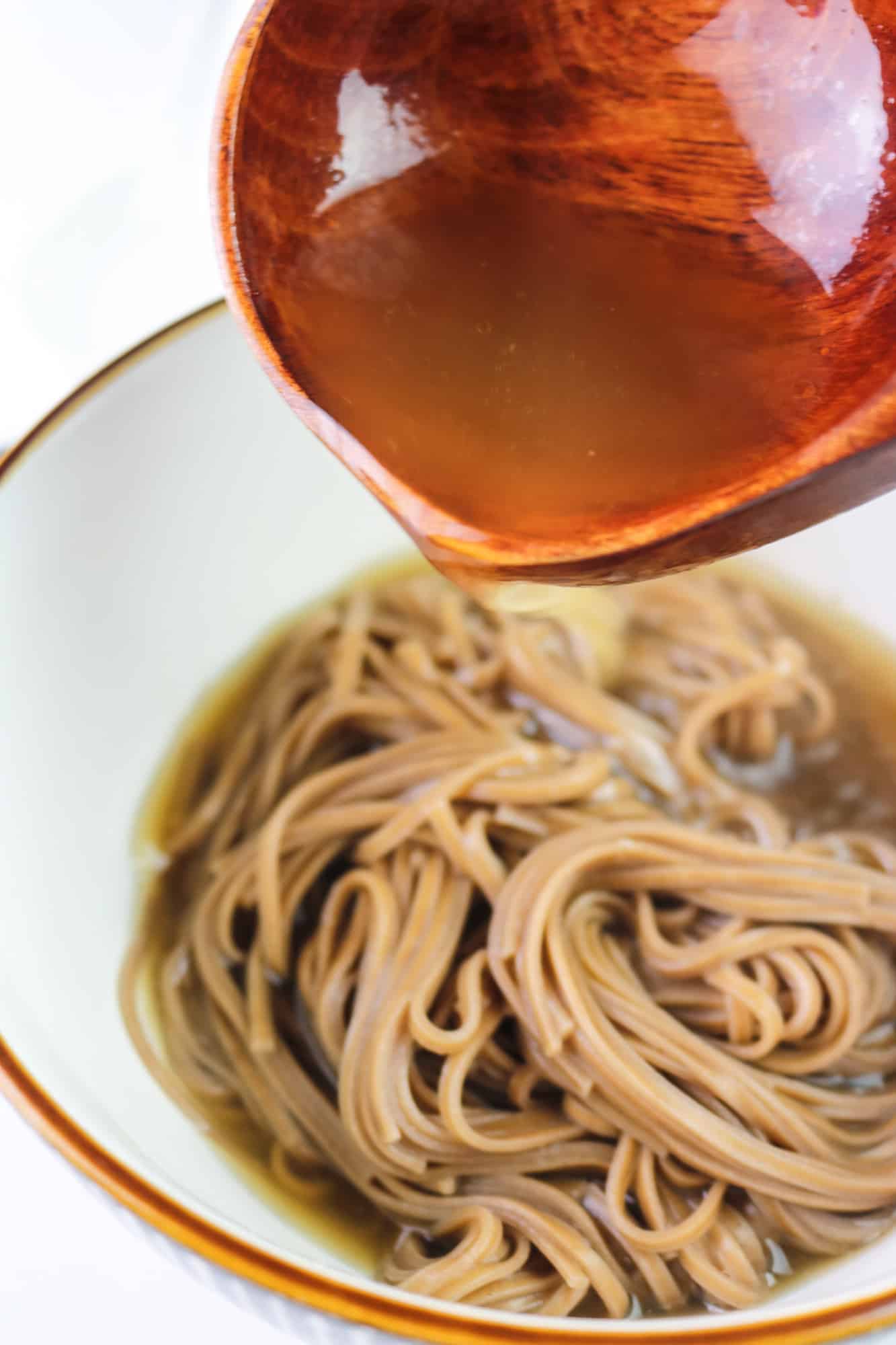
If you are up for some heat, feel free to add a touch of chili, in form of chili oil or flakes. As much as I love (adore might be more correct) spicy food, I personally prefer to leave the heat out of my ramen broth, as I find it already rich and flavourful as it is.
Ingredients
The basic ingredients for a good and flavourful ramen broth are just a bunch:
- Water
- Kombu Seaweed
- Shiitake Mushrooms (optional, but give a deeper flavour)
- Soy Sauce (or Tamari for a gluten free version)
- Sake (optional but recommended)
To which we will add:
- Sesame Oil
- Salt
- Garlic Powder
- White Pepper
- Fresh Ginger
- Spring Onions
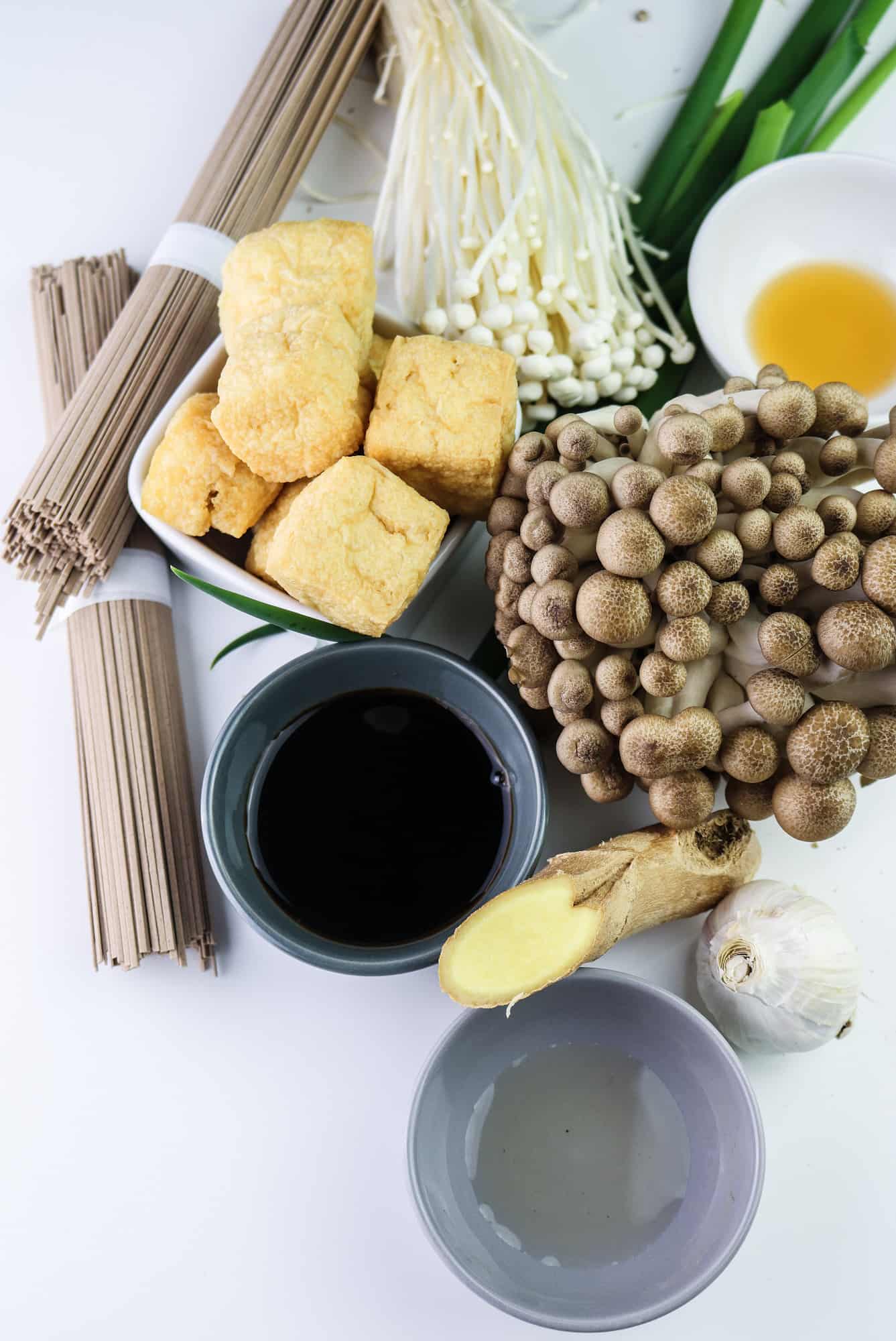
To make the broth we need to make a dashi first by pouring hot water over the kombu piece and the dry shiitake. Allow to infuse for 15 minutes covered, then we remove the seaweed.
In a wok we add the sesame oil, the garlic, the ginger add the spring onions and heat them up for a bunch of seconds, then sake and soy sauce go in, followed by the dashi and bring it all to a boil. As soon as the liquid reaches the boiling point the broth is ready.
If you want to add even more personality to your ramen broth, feel free to enrich it with a tablespoon or two of my Vegan Fish Sauce.
I picked a couple of different types of mushrooms.
As well as the shiitake that go to flavour the broth I used Brown Shimeji and Enoki. They are both available in Asian shops or markets, while the shiitake are largely available in pretty much all supermarkets, especially in their dry form, or online.
Of course you can use any other mushrooms you like, like portobello, champignon (closed cup), porcini, oyster, king oyster, etc.
The mushrooms will be quickly sautéed in a pan with chopped garlic and sesame oil.
Normally, I first sauté the mushrooms, set them aside and make the broth in the same wok, so it takes even more flavour.

For a protein boost I also added a bunch of tofu puffs (or puffed tofu), which is basically deep fried bean curd. I talk largely about this ingredient in this post.
If you already have them and you'd like to use in some vegan recipes check these Marinated Tofu Skewers, or these Tofu Puffs Chinese Style, as well as these Tofu Puffs in Mushroom Sauce. They also make a good addition to these Thai Drunken Noodles.
Last - but not least - you are going to need a good bunch of noodles.
Since this is a soba ramen version, we want to look for soba noodles. Soba noodles are made from buckwheat. They can be made 100% from buckwheat flour or from a mix of buck and wheat flours. Those made only from buckwheat are totally gluten free, hence suitable for people with gluten intolerance or allergies. Their taste is slightly nuttier and intense compared to the wheat ones. Also, these noodles have interestingly about half the calories and carbohydrates as typical white flour pasta/noodles, which makes them a really good weight watcher alternative.
The trick to have noodles that remain firmer, springier, and less likely to fall apart in your soups and sauces is to add some baking soda to their cooking water.
Every time I make ramen, in fact, I boil the noodles in approx 1 liter of water with 1 tablespoon of baking soda.
This method won't impact the taste of the noodles, I promise.
If you haven't tried it, let me know what you think after you do! I'm sure it will be a game changer for many of you 🙂
But now, let's talk about the execution. Enjoy!
How to Make the Best Vegan Mushroom Soba Ramen
Step 1: Make the Vegan Dashi
Place the dried shiitake and kombu in a heat-proof bowl. Pour over 1 litre of boiling water, cover, and allow to infuse for 10–15 minutes. This is your base broth packed with umami.
Step 2: Cook the Mushrooms
In a wok or large pan, heat ½ tablespoon sesame oil. Add the minced garlic and shimeji mushrooms, tearing them gently by hand. Stir-fry on high for 3–5 minutes until soft and lightly golden. Add the tofu puffs, stir, and cook for 2 more minutes. Set aside.

Step 3: Build the Broth
In the same wok, heat another ½ tablespoon sesame oil. Add the ginger, chopped white spring onions, and garlic. Sauté briefly, then deglaze with sake and tamari. Pour in the infused dashi (removing the kombu first), add extra water if needed, and season with salt and white pepper. Bring to a gentle boil, then switch off the heat.
Step 4: Prepare the Soba Noodles
Boil 1 litre of water with 1 tablespoon baking soda and ½ tablespoon sea salt. Cook soba noodles according to the packet instructions (typically 4–5 minutes), then rinse under cold water to stop them from becoming mushy.

Step 5: Warm the Enoki
A minute or two before serving, add the enoki mushrooms to the broth just to warm through—no need to fully cook them.
Step 6: Assemble Your Ramen Bowl
Divide soba noodles between two bowls. Ladle over the hot broth, then top with sautéed shimeji, tofu puffs, enoki mushrooms, chopped green onions, and pieces of nori. Serve immediately and enjoy the depth of flavour in every slurp.

How to Store & Reheat
Ramen is best served fresh, but you can store the broth and toppings separately for up to 3 days in the fridge. Reheat the broth gently on the stove and boil fresh noodles when ready to eat for best texture.
Tips & Substitutions
- No tofu puffs? Use pan-fried tofu cubes or tempeh.
- No soba noodles? Udon or rice noodles also work well.
- Gluten-free? Use tamari and certified GF soba noodles.
- Low sodium? Adjust the tamari/soy sauce to taste or dilute the broth slightly.
Recipe
If you then want to subscribe to the blog by email, just do it by entering your email address below. You will receive an email every time a new recipe is published. No spam! Not my thing!




Pizza and Pasta Hut
Thanks for sharing...Checkout my profile by for Fast food south west London Wimbledon