
A Moroccan-inspired vegetable tagine is a delightful dish that combines bold flavours, vibrant colours, and wholesome ingredients slow-cooked for a healthy and nutrient-packed meal.

If you're looking for ideas to use your Tagine Pot or you simply want to replicate the most iconic healthy, aromatic and satisfying Moroccan dish in a plant-based version, this recipe is tailored to you! This North African delight blends fragrant spices, hearty vegetables, and slow-cooked goodness into a warm, soul-soothing meal that can turn a simple dinner into an exotic culinary experience.
In this post, we'll explore the rich history of tagine, why it's a beloved dish in Moroccan cuisine, how you can create your own delicious vegetable tagine at home, and tips for adding your own creative twists.
Jump to:
🌱What is a Tagine?
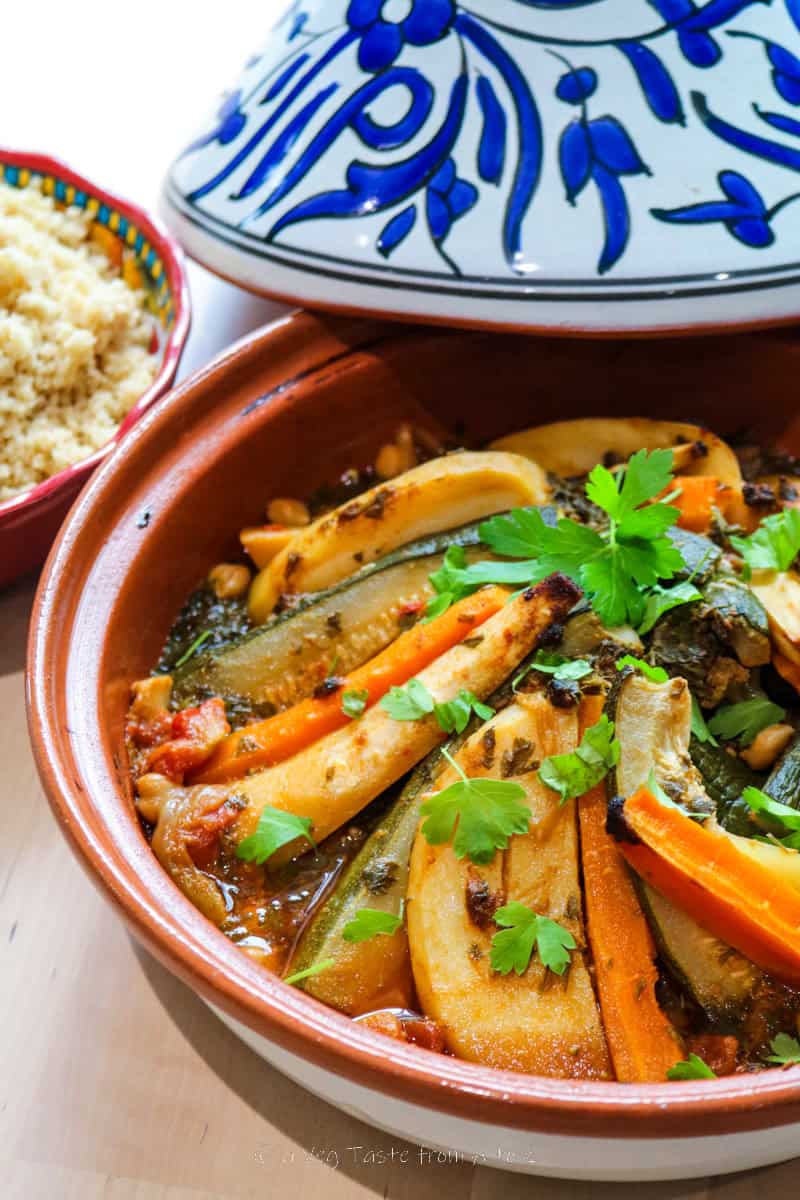
A tagine (pronounced ta-jeen) is not only a dish but also the name of the distinctive earthenware pot in which it is traditionally cooked. The tagine pot is characterized by its conical lid, which helps to circulate steam, keeping the ingredients tender and moist. This slow-cooking method captures the vibrant flavours of the spices and vegetables, making the dish incredibly aromatic.
Originating from Morocco, tagines have been an essential part of the region's cuisine for centuries. They were historically a practical way for nomadic people to prepare meals over open fires. Today, they’re considered a culinary art form, enjoyed both in Moroccan homes and in restaurants around the world.
🌟Why You'll Love this Recipe
What makes a Moroccan-inspired vegetable tagine so unique is its signature blend of spices, often referred to as Ras el Hanout. This aromatic spice mix typically includes cumin, turmeric, coriander, and paprika. Sometimes it may even have a hint of sweetness from dried fruits like apricots, raisins, or prunes, which are often added to balance the earthiness of the vegetables.
A good tagine uses these warm spices to build layers of flavour, creating a delicious contrast between savoury and sweet. The slow-cooking process melds these flavours into the vegetables, turning them into tender, flavourful morsels that soak up the rich broth.

🗒️Essential Ingredients for a Vegetable Tagine
Creating a Moroccan-inspired vegetable tagine is a simple process, but the key lies in using fresh, vibrant vegetables and a rich mix of seasonings. Here's a breakdown of some core ingredients you'll need:
Root Vegetables – Such as carrots, potatoes, squash etc, commonly used for their sweetness and ability to absorb flavours.
Chickpeas – These add protein and texture, making the dish hearty and filling.
Tomatoes and Onions – The base of the dish often starts with sautéing these two ingredients to build a flavourful foundation.
Spices – Cumin, saffron (or turmeric), paprika, and fresh herbs like cilantro and parsley are essential for creating that authentic Moroccan flavour.
Dried Fruits – Apricots, raisins, or dates provide a delightful burst of sweetness.
Olives and Preserved Lemons – These classic Moroccan ingredients add a tangy, salty contrast to the dish.
🥑 Health Benefits of Vegetable Tagine
This Moroccan-inspired dish isn't just a feast for the senses—it's also packed with nutritional benefits:
- Rich in fiber: The combination of vegetables, chickpeas, and dried fruits provides a good amount of dietary fiber, aiding digestion and keeping you full.
- Antioxidant-packed: Spices like saffron, cumin, and cayenne pepper are known for their anti-inflammatory properties, while the vegetables are rich in vitamins and minerals.
- Low in fat: With minimal oil and no dairy or meat, this tagine is naturally low in fat and great for heart health.
🔪 How to Make Plant-Based Moroccan Inspired Tagine
Step 1: Prepare the Marinade
Gather all the ingredients for the marinade and mix well into a medium size bowl and set aside. If you don't like coriander you can swap it for parsley and add a few leaves of fresh mint to recreate its flavour (ideal hack for those, like myself, that have the OR6A2 gene that makes coriander/cilantro taste soapy. Read more here!).
Step 2: Develop the Flavours
Add olive oil to the tagine and sweat the onions on medium heat with some salt and 1 tablespoon of water. If (like me) you have an induction stovetop, cook the onions in a pan instead.
Add chopped tomatoes and cook down for another couple of minutes.
Stir in around ⅓ of the marinade, mix well and cook for another 2-3 minutes. Then stir in the chickpeas too and the water/broth. If using a pan, transfer the mixture to the bottom of the tagine now, otherwise skip this last passage.
Step 3: Build The Vegetable Dome
Place the broccoli florets and dried fruit (if using) in the middle of the dish, then start building a teepee-shaped dome with the vegetable wedges/sticks making sure to alternate them. Finish with some olives and preserved lemon wedges (if using).
Spoon the remaining marinade over the vegetables and put the top of the tagine on.

Step 4: Slow Cook the Tagine
On the stovetop: Simmer over medium-low heat for around 45-50 minutes (until all vegetables are fork tender), basting the vegetables with the juice collected at the bottom of the dish every 10 minutes.
In the oven: Bake in a 180°C-350°F preheated oven for 90 minutes (or until vegetables are cooked through). This is the recommended method for those that don't have a gas or electric stovetop, or if you don't want to keep basting the vegetables with the juices, as if baking, you won't need to do that.
Step 5: Garnish and Serve
Garnish with freshly coriander or parsley and serve over some couscous to soak up all the beautiful juices or with some flat bread.

✍🏻Variations
While traditional Moroccan recipes are delicious as is, there's room for creativity. Here are some ideas for adapting the recipe:
Make it spicier: If you love heat, add some harissa or fresh chilies for an extra spicy kick.
Add more vegetables: Feel free to add whatever vegetables are in season or that you have on hand, such as aubergine (eggplant), bell peppers, or spinach.
Switch up the protein: If you want a higher protein content, add tofu or tempeh to the mix.
🍽️Serving Suggestions
Moroccan Inspired Vegetable tagine is traditionally served with couscous, a fluffy grain that soaks up the flavourful sauce. You can also serve it with flatbread or quinoa for a gluten-free option. For added texture, sprinkle some toasted almonds or seeds on top, and pair the meal with a side of harissa—a spicy chili paste that gives the dish an extra kick.
🥡Storage
A vegetable tagine will typically keep well in the refrigerator for 3 to 5 days if stored properly in an airtight container. To maintain the freshness and flavour, allow the tagine to cool completely before refrigerating it.
If you'd like to store it longer, you can freeze vegetable tagine for up to 3 months. When freezing, be sure to use freezer-safe containers or bags, and leave a little room at the top for the food to expand as it freezes.
When reheating, thaw frozen tagine in the refrigerator overnight, and gently warm it on the stove or in the microwave to bring back its full flavour.
📖Recipe

If you then want to subscribe to the blog by email, just do it by entering your email address below. You will receive an email every time a new recipe is published. No spam! Not my thing!





Leave a Reply